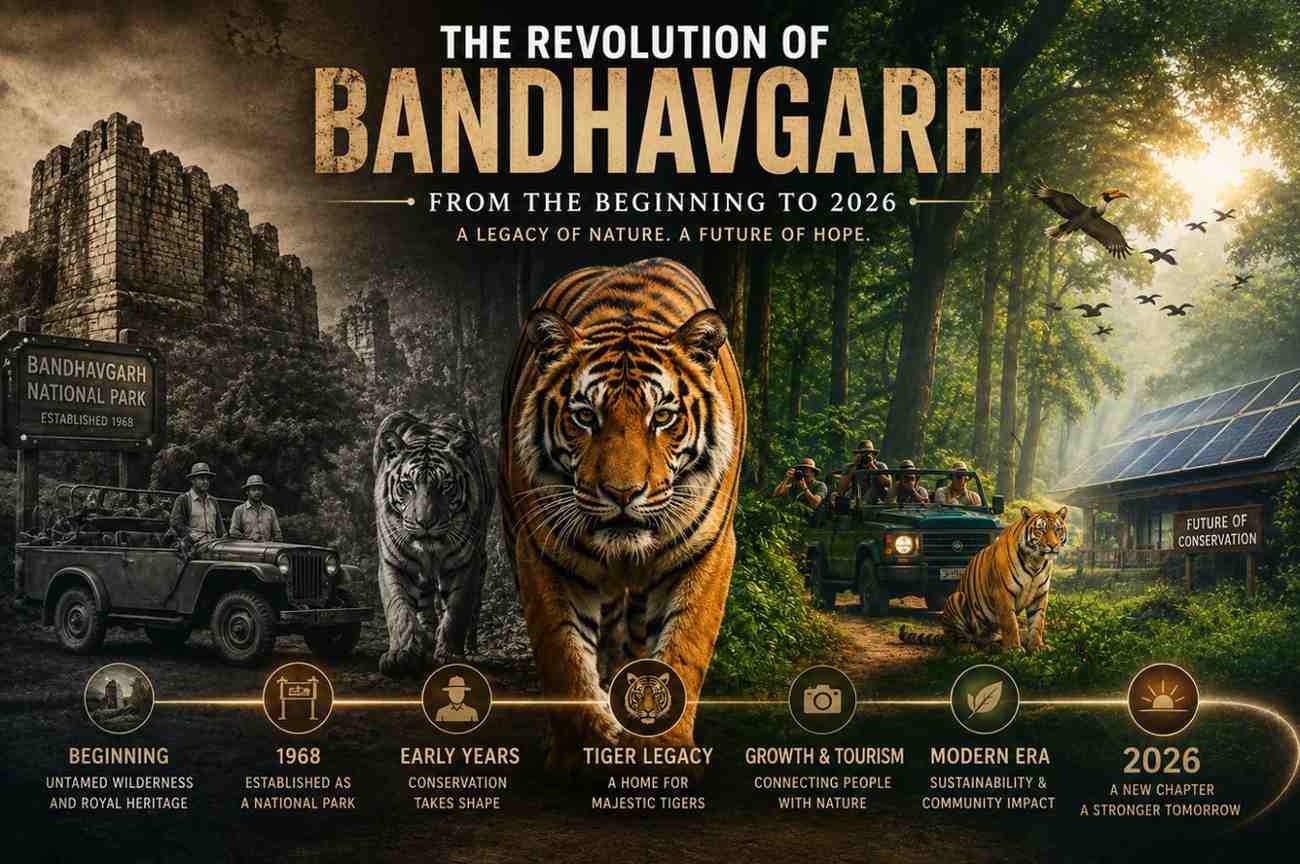
The Revolution of Bandhavgarh from the Beginning to 2026
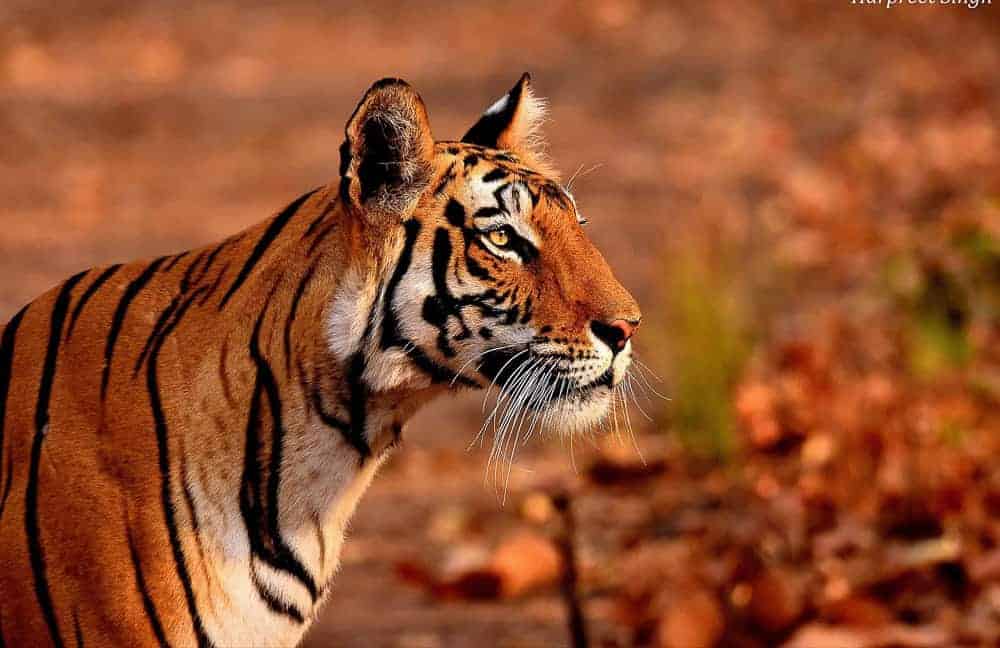
The revolution of Bandhavgarh National Park, which is in itself a place where tigers are kept safe. Show a first white tiger, MOHAN, and it's a part of the royal Bengal tiger population at Bandhavgarh Tiger Reserve. Bandhavgarh’s journey evolved from an ancient mythological fortress and royal hunting ground to one of India's most celebrated tiger reserves.
Ending the Royal Hunting:
From the year 1617, the king of Rewa ruled the land of Bandhavgarh Tiger Reserve; the forest land is mainly used for hunting in this forest, and no outsiders were allowed inside the forest; only their family and relatives are allowed to enter the park.
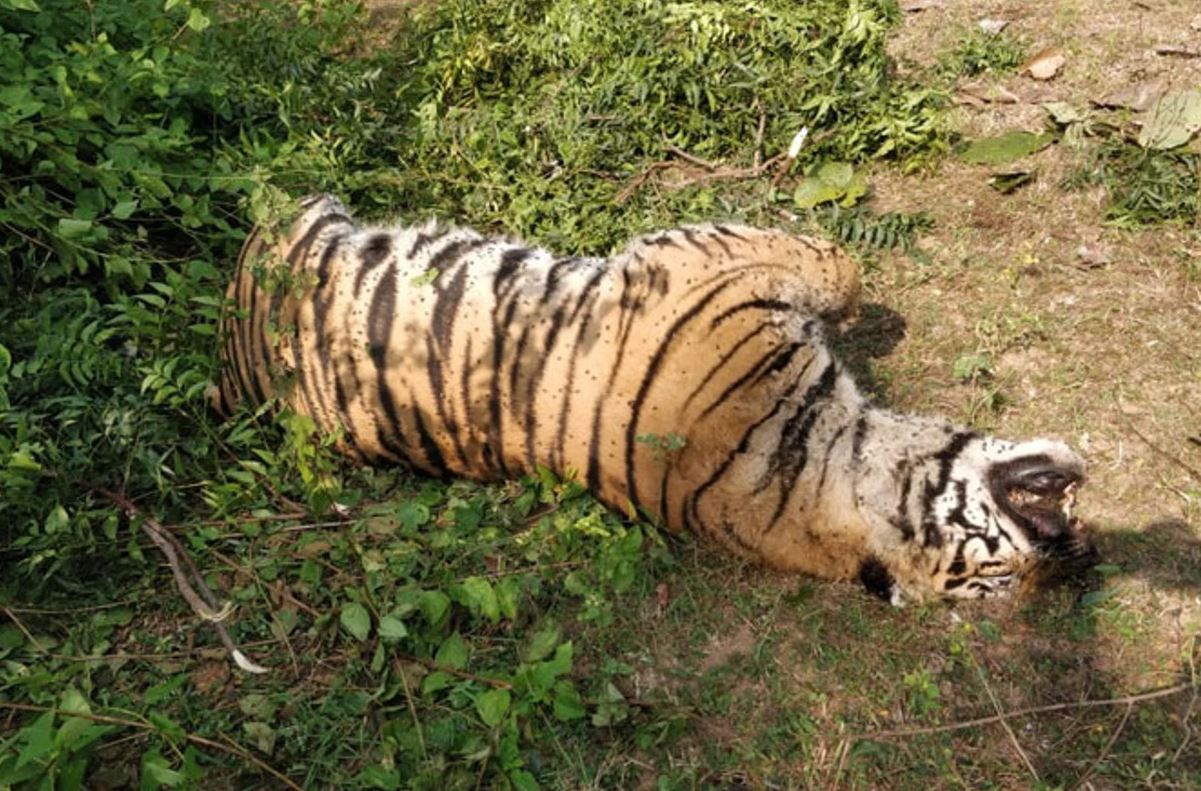
After that, Bandhavgarh National Park became the private game or hunting reserve of Rewa’s Maharaja. With great difficulty, when Madhya Pradesh became a state in 1951, the government started worrying about the hunting and deforestation of the forest guards going on in Bandhavgarh National Park. Officially announced as a national park in 1956, but when poaching and logging began to increase in the Bandhavgarh forests after independence, Maharaja Martand Singh of Rewa intervened to protect it. Following his initiative, the government declared it a national park in 1968, imposing a complete ban on hunting. The government and the forest department have made strict measures to curb poaching and logging, and to make it a world-renowned national park:
With the establishment of the National Park in 1968 (and the launch of 'Project Tiger' in 1993), patrolling was increased in the core and buffer areas. Special forest guards were deployed to prevent illegal activities within the park.
To prevent animals from moving out of the forest, small dams and reservoirs were built within the park to alleviate water scarcity.
The government promoted eco-tourism, employing local villagers as safari guides, drivers, and resort staff. This allowed local people to become protectors of the forest rather than destroyers.
From Royal Hunting Grounds to Tiger Kingdom:
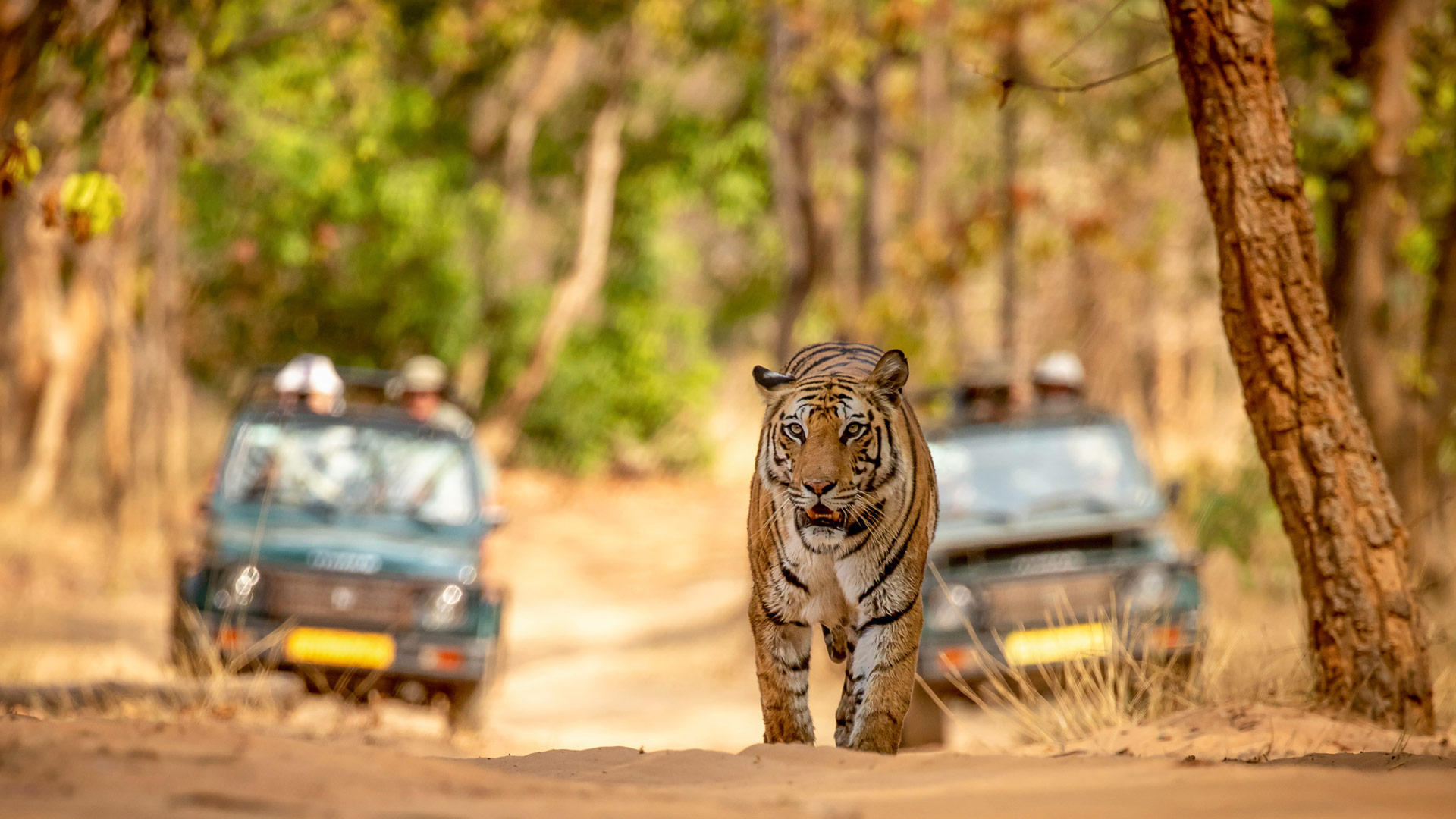
The royal hunting ground is now turned into a tourist attraction where travelers come from all over India and other countries. It is the land of white and royal Bengal tigers. The Bandhavgarh National Park, known as the Bandhavgarh Tiger Reserve, was famous for tiger hunting in ancient times; now it's famous for tiger sightings. According to the area of the Bandhavgarh National Park, from another national park, there is a high chance that you can see the Royal Bengal tiger, and this can only be possible if you book your Bandhavgarh safari booking 90 days before your trip so that you do not have to face any last-minute problems during your travel.
Shifting the Locals from the Core Area of Bandhavgarh:
Villagers living in the core area of Bandhavgarh Tiger Reserve have been resettled in safer areas outside due to the threat from predatory wildlife and lack of basic amenities. They have been provided land or compensation of up to Rs 15 lakh as part of the rehabilitation package. The process of further displacement is underway, with affected residents being relocated to new colonies with modern mainstream infrastructure and better livelihood opportunities. Social and tribal rights groups have also claimed that traditional forest dwellers faced severe cultural and economic hardship in leaving their land and adapting to the urban environment. Many families initially struggled to adjust to the new economy due to the loss of traditional sources of livelihood (such as forest produce). Continuous efforts are being made to improve the living standards of displaced families under the schemes of the management of Bandhavgarh National Park and the Forest Department. Most of the displaced families have been moved from the core area to buffer zones (such as the outskirts of Tala, Magadhi, or Khitauli) or nearby revenue villages. During the Bandhavgarh safari booking, if you choose any buffer zone for the jeep or canter safari, or you stay at a resort near the buffer zone, you can easily meet these displaced villagers. They have not completely disappeared but are living in villages on the park's outer borders.